
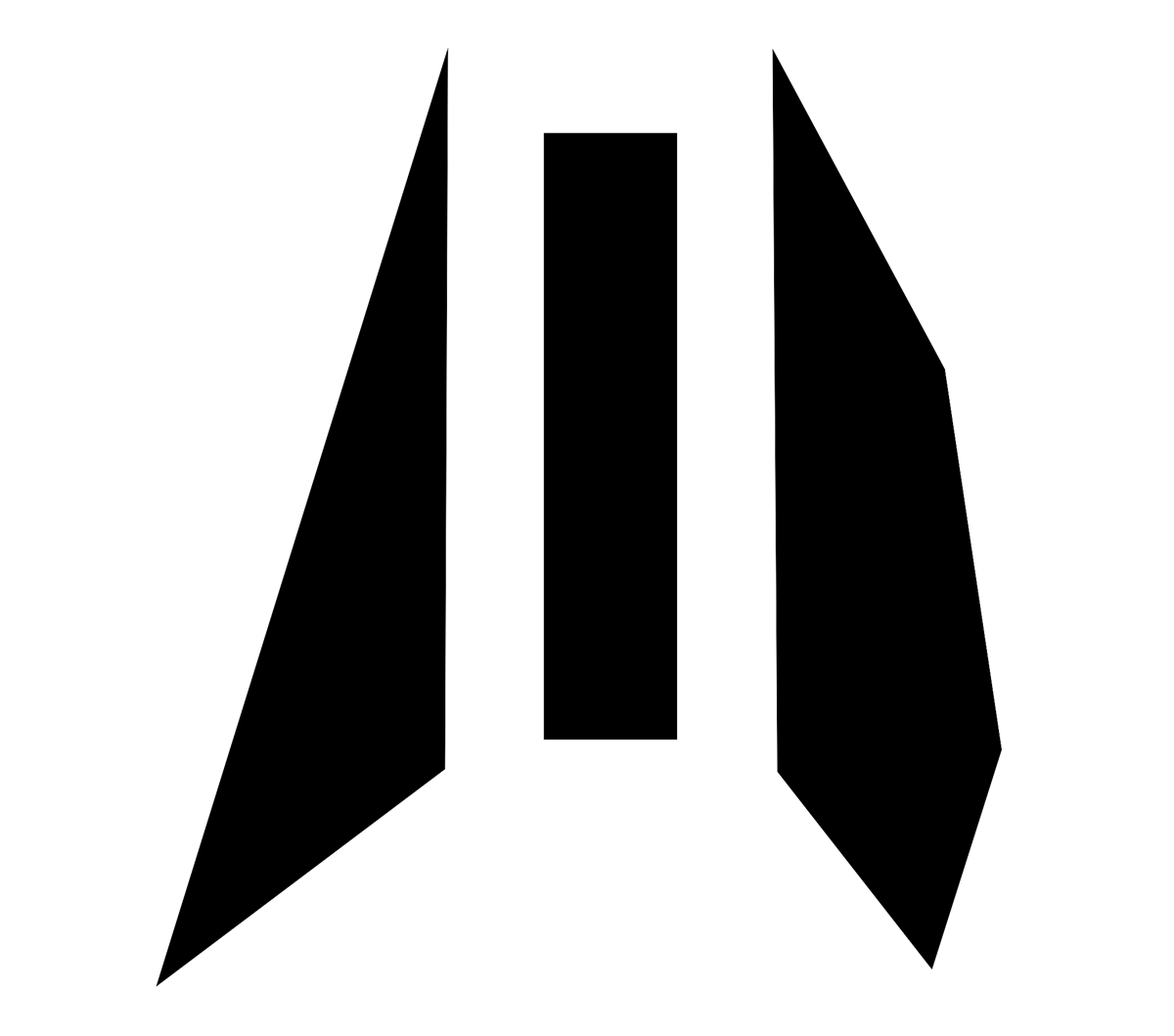
The TriQuadPenta Concept
=_=_=_=_=_=_=_=_=_=_=_=_=_=_=_=_=_=_=_=_=_=
Concrete Abstraction
=_=_=_=_=_=_=_=_=_=_=_=_=_=_=_=_=_=_=_=_=_=
[1] – Definition of Forms
The TriQuadPenta Concept Manifesto is based on three fundamental shapes: the triangle, the quadrilateral, and the pentagon. These are defined solely by their number of corners – three, four, or five respectively – yet they can take on any conceivable variation in form, proportion, and placement.
A triangle need not be equilateral; it can be skewed, flat, or acute. A quadrilateral may appear as a square, a trapezoid, or a parallelogram – it remains defined by its four corners. A pentagon may be regular or completely asymmetrical. What matters is that the structure always adheres to its fixed number of points.
[2] – The Autonomy of Form
Concrete Abstraction resides in the constant tension between the form’s fixed, numerical definition (the concrete) and its unlimited, non-figurative manifestation (the abstract).
The meaning of abstraction lies solely within its forms, colors, and composition. It must stand as an autonomous whole, where the logic and aesthetics of the work emerge through relationships between forms and space. The work communicates exclusively through its own visual logic, devoid of narrative or symbolic weight.
[3] – The Structural Role of Colour
Colour in TriQuadPenta is a structural factor, not an expression.
The system operates from the neutrality of form and primarily employs black/white and/or the inherent colour of the material.
Colour is introduced only when it is necessary for the logic of abstraction.
Its role is always to support the dynamics of form and the balance of the system – never to function as decoration or symbol.
[4] – Negative Space as Counter-Figure
Negative space is just as essential as the filled lines. The empty fields and intervals must be recognized as active components of the composition, contributing to the work’s balance and dynamism. A piece may even be dominated by negative space, where triangle, quadrilateral, and pentagon exist only as carved absences. Negative space is not merely an interval but a counter-figure — a geometric field in itself, arising not between forms but through them.
[5] – Conceptual Inversion
In TriQuadPenta, negative space can be actively created through overlap. When a form is consciously used to carve absence rather than to add presence, its role is inverted.
It then functions as a generator of negative space, creating a conceptual tension in which presence is defined through its own absence.
[6] – Layers and Invisible Connections
The geometric forms may exist in layers – partially visible, suggested, or entirely hidden. Their presence can only be sensed when certain edges or points protrude, hinting at an underlying structure. The layers add depth and complexity to the abstraction, inviting the viewer to explore the hidden connections between forms.
[7] – Perceptual Wholes
The composition can activate shapes that are not directly visible but perceived as complete through placement, overlap, or fragmentation. When one form partially covers another, or when several forms together suggest a concealed structure, perceptual wholes arise – for example, a quadrilateral that is not drawn but emerges from the surrounding space. These invisible figures function equally alongside the explicit ones, contributing to the tension between the seen and the sensed.
[8] – Independence from Medium
The concept is not bound to any specific technique or material. The abstraction can be realized through painting, sculpture, digital art, installation, or other media. What is essential is that the work maintains its focus on geometric forms, their relationships, and the logic of abstraction, regardless of medium.
[9] – Freedom of Method
The TriQuadPenta concept does not dictate how a work should come into being, but rather what it should consist of. The artist chooses their own method and process – through sketches, strict planning, experimental arrangement, or intuitive construction – as long as the final work clearly adheres to TriQuadPenta’s core principles.
===========================
© Copyright TriQuadPenta™ 2025 – All Rights Reserved